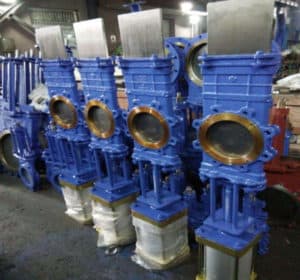
NTGD Through Conduit Knife Gate Valve — Full-Bore Flow Control with Zero Leakage and Low Pressure Drop

Through Conduit Knife Gate Valve

1: Nominal pressure: PN1.0 ~ 1.6Mpa
2: Diameter range: DN50 ~ DN2000
3: Connection type: wafer and flange
4: Transmission mechanism: manual, pneumatic, electric
5: Main material: CF8
6: Ram material: 2Cr13, 201, 304, 316, 316L
7: Applicable temperature: ≤ 300 ℃
8: Leakage class: D (1) × DNmm3/s)
9: Packing seal: oil containing PTFE packing

NTGD Through Conduit Knife Gate Valve

through conduit knife edge valve

The NTGD Through Conduit Knife Gate Valve delivers full-bore flow control, zero leakage, and minimal pressure drop, setting a new standard for reliable performance. Its robust design features an integral body, advanced self-cleaning scrapers, and a bi-directional sealing system. These innovations address common valve issues:

  • Manufacturing and installation flaws often cause leakage in industrial valves.

  • Material wear and variable operating conditions further contribute to leakage.

  • NTGD’s specialized sealing structures and high-quality materials ensure superior sealing performance.

Industries such as mining, chemicals, power, and wastewater treatment demand solutions that handle concentrated and abrasive media. The following table highlights key sectors adopting this advanced valve:

Industry

Market Share Insight

Mining

Significant adoption due to the need for handling heavy slurries and materials.

Chemicals Plants

Utilized for their efficiency in managing viscous substances.

Power Plants

Important for regulating flow and pressure in energy production.

Wastewater Treatment Plants

Expected to have the highest growth rate in demand for these valves.

Oil and Gas

Key sector for pressure regulation and flow control applications.

Key Advantages

  • The NTGD Through Conduit Knife Gate Valve offers full-bore flow, ensuring maximum efficiency and minimal pressure drop in various industrial applications.

  • Zero leakage is a key feature, thanks to the advanced dual sealing system, which helps maintain process integrity and reduces environmental risks.

  • The self-cleaning mechanism prevents clogging, enhancing reliability and reducing maintenance needs, especially in harsh environments.

  • Operators benefit from easy maintenance with replaceable components, leading to lower costs and extended service life of the valve.

  • NTGD provides expert support for valve selection and installation, ensuring customers find the best solutions for their specific needs.

Through Conduit Knife Gate Valve Basics

Definition & Structure

A Through Conduit Knife Gate Valve features a robust, integral body that enables straight-through, unobstructed flow. This design eliminates cavities where media can accumulate, ensuring reliable operation even in harsh environments. The valve’s structure includes several key components that work together to deliver superior performance:

Component

Contribution to Performance

Gate Plate

Aligns with the flow passage for smooth fluid flow when open; blocks flow when closed.

Floating Seat Design

Maintains tight contact with the gate plate, ensuring reliable sealing and compensating for wear.

Actuation Methods

Offers pneumatic or electric operation, increasing adaptability for different applications.

The full port design of the Through Conduit Knife Gate Valve minimizes pressure drop and maximizes flow capacity. The integral body construction supports bi-directional flow, preventing clogging and reducing maintenance needs.

Working Principle

The Through Conduit Knife Gate Valve operates by moving a gate plate vertically within the valve body. When the valve opens, the gate plate aligns perfectly with the flow path, allowing media to pass through without obstruction. When closed, the gate plate forms a tight seal against the floating seat, effectively blocking flow and preventing leakage.

This valve stands apart from conventional gate valves in several ways:

Feature

Through Conduit Knife Gate Valve

Conventional Gate Valve

Design

Handles high consistencies of fiber and solids

Uses a traditional wedge design

Sealing Mechanism

Employs body seats and packing glands

Relies on a wedge mechanism

Leakage

Minimizes through leakage and fugitive emissions

Typically exhibits lower leakage

Applications

Excels in high fiber and mineral processing

Suitable for general flow control

The self-cleaning scrapers and twin elastomer seats remove debris from the gate plate during operation. This self-cleaning action prevents media build-up and ensures consistent sealing, even with abrasive or viscous fluids.

Design Purpose

Engineers designed the Through Conduit Knife Gate Valve to minimize flow resistance and handle concentrated, challenging media. The full port, integral body design reduces pressure drop and enhances flow capacity. The valve supports bi-directional flow, making it suitable for applications where flow direction may change or where clogging poses a risk.

Key design purposes include:

  • Minimizing flow resistance with a full port, straight-through passage.

  • Preventing clogging and media build-up using self-cleaning scrapers and a push-through gate design.

  • Providing reliable, zero-leakage sealing with a floating seat and bi-directional sealing system.

  • Adapting to various industrial environments with customizable materials and actuation options.

Note: The compact design and easy installation make this valve a cost-effective solution for industries such as mining, chemical processing, and wastewater treatment. Its ability to cut through thick and heavy liquids ensures dependable performance in the most demanding applications.

Design & Features

Full Bore Flow Path

The NTGD Through Conduit Knife Gate Valve features a full bore flow path. This design eliminates obstructions, allowing media to pass through without restriction. Operators benefit from reduced turbulence and minimal pressure drop. The robust construction ensures the valve withstands demanding environments, supporting high flow rates and maintaining system efficiency.

Dual Sealing System

NTGD engineers developed a dual sealing system to deliver zero leakage performance. The system uses advanced materials and precision engineering to maintain a tight seal, even under fluctuating pressures. Laboratory and field tests confirm its effectiveness:

Test Type

Result Description

Value

Uniaxial Strength

28-day uniaxial compressive strength of the dual-liquid material

11.06 MPa

Gas Drainage

Increase in gas drainage concentration compared to original sealing material

200.5% increase

Negative Pressure

Average gas drainage negative pressure using dual-liquid material

Increased from 7.8 kPa to 16.6 kPa

These results demonstrate the dual sealing system’s ability to prevent leakage and maintain integrity in critical applications.

Self-Cleaning Mechanism

The self-cleaning mechanism sets this valve apart in harsh media environments. Scrapers and a moveable seat remove debris from the gate plate during each cycle. This feature offers several advantages:

  • The self-cleaning mechanism prevents clogging, which directly reduces the frequency of maintenance required.

  • Effective cleaning cycles using high flow rates ensure consistent performance, enhancing operational reliability in harsh environments.

  • Studies show that cleaning with maximum flow rates significantly improves cleaning effectiveness compared to lower flow rates.

Operators experience fewer shutdowns and greater reliability, even when handling abrasive or viscous media.

Replaceable Seat & Packing

NTGD valves feature a replaceable seat and packing system. This design simplifies maintenance and extends the valve’s service life.

  • Regular maintenance prevents costly emergency repairs, leading to long-term financial savings.

  • Quick response times and efficient repairs minimize downtime, ensuring production lines operate smoothly.

  • Regular attention and inspection of fluid system components can be performed at a low cost.

  • Replacing packing in utility valves prevents internal leaks, which can lead to significant downtime.

A proactive maintenance routine maximizes component lifespan and reduces unexpected failures, lowering lifecycle costs.

Body Materials

NTGD offers a range of body materials to suit different process conditions. The following table highlights available options and their performance in corrosive or abrasive environments:

Body Material

Knife Material

Seat Type

Stainless steel

SS304, SS316, SS2205

NBR, EPDM, FKM, Metal to Metal

Duplex SS

904L

HC276

These material choices ensure the Through Conduit Knife Gate Valve delivers reliable performance in aggressive chemical, mining, and wastewater applications.

Performance & Advantages

Zero Leakage

NTGD engineers designed the sealing system to deliver zero leakage, even under demanding conditions. The dual sealing mechanism uses advanced elastomers and precision-machined metal seats. Operators in chemical plants and mining facilities rely on this valve to prevent fugitive emissions and protect equipment. The bi-directional sealing ensures tight shutoff from both flow directions. This feature reduces environmental risks and supports compliance with strict safety standards.

Reliable sealing performance means operators can trust the system to maintain process integrity and avoid costly downtime.

Low Pressure Drop

The full-bore flow path of the NTGD valve minimizes turbulence and pressure loss. Fluid passes straight through the unobstructed conduit, preserving system efficiency. Engineers measured significant reductions in energy consumption when replacing conventional valves with this design. The streamlined passage supports high flow rates, making it ideal for applications where throughput and process speed matter.

Valve Type

Pressure Drop (ΔP)

Flow Capacity (Cv)

Conventional Gate Valve

High

Moderate

Through Conduit Knife Gate Valve

Low

High

Operators benefit from lower pumping costs and improved process control.

Anti-Clogging

Industrial processes often involve slurries, fibrous pulp, or abrasive tailings. The NTGD valve excels in these environments due to its anti-clogging capabilities:

  • Knife gate valves handle high-solid slurries, fibrous pulp, chemical-laden wastewater, and abrasive tailings.

  • The full-bore design minimizes flow restrictions, enhancing anti-clogging performance.

  • Straight-through construction allows solids and particulates to pass freely without getting trapped.

  • The valve is specifically designed for high concentrations of suspended solids in mining and wastewater treatment.

  • The self-cleaning action of the gate scrapes debris from the seat, preventing buildup and ensuring reliable operation.

  • The sharp-edged gate shears through suspended solids, reducing the risk of pressure build-up.

  • Modern designs include flush ports or drain openings for easy purging of residues, minimizing maintenance requirements.

Operators in high-solid applications experience fewer blockages and reduced downtime.

Swift Operation

The NTGD valve responds quickly to actuation commands. Pneumatic and electric actuators deliver rapid opening and closing cycles. This swift operation supports emergency shutoff scenarios and process adjustments. The robust stem and gate mechanism maintain alignment and speed, even after repeated cycles. Operators in power generation and chemical processing value the fast response for maintaining safety and productivity.

Easy Maintenance

Maintenance teams appreciate the straightforward upkeep of the NTGD valve. The unobstructed flow path reduces abrasion and wear, extending service intervals. Maintenance records from flue gas desulfurization plants show reliable function and minimal shutdowns. The replaceable seat and packing system allows quick repairs without removing the valve from the line.

  • Adjust the packing once a month.

  • Lubricate the stem and stem nut every three months using a grease gun.

  • Lubricate the gear operator once a year.

  • Cycle the valve at least every six months if not in use for a long time.

Operators benefit from reduced maintenance costs and improved system reliability.

Feature

Benefit

Straight-through flow

Less abrasion, longer life

Replaceable components

Quick repairs, less downtime

Self-cleaning gate

Fewer blockages, easy upkeep

Regular attention to these simple maintenance steps ensures optimal valve performance and extends equipment lifespan.

Technical Specs

Size & Pressure Range

NTGD Through Conduit Knife Gate Valves offer a comprehensive range of sizes and pressure ratings to meet diverse industrial requirements. Customers can select from compact models for domestic systems to large-diameter valves for municipal and energy applications. The following table outlines available sizes and corresponding pressure classes:

Size Range (inches)

Application Type

Pressure Ratings (ANSI/ASME Classes)

½ to 2

Domestic plumbing, low-capacity industrial systems

Class 150, Class 300

2½ to 12

HVAC, water treatment, medium industrial pipelines

Class 150, Class 300

14 to 60

Municipal water, oil & gas, high-capacity power plants

Class 150, Class 300

Pressure Rating Class

Pressure Tolerance (psi)

Equivalent PN Rating

Class 150

Up to 285

PN10

Class 300

Up to 740

PN16

Bar chart comparing NTGD valve size ranges and pressure ratings

NTGD valves consistently meet or exceed industry standards, ensuring reliable performance in every application.

Material Options

NTGD offers a wide selection of materials engineered for durability and chemical compatibility. Customers can choose the optimal configuration for their process conditions. The table below highlights key material options and their performance characteristics:

Material

Max. Temperature (°C)

Application

Hard sealing

≥200

Low density, high temperature

EPDM (E)

120

Acidic, non-oil media

Nitrile (N)

80

Oil and wear resistance

FKM/Viton (V)

180

Chemicals, high temperature liquid

PTFE (T)

150

Corrosion, alkaline resistance

Bar chart comparing max temperature resistance of valve materials
  • Ramie PTFE packing: Max. 130°C, pH 5-11

  • PTFE Braided packing: Max. 240°C, pH 2-13

  • PTFE+KEVLAR: Max. 260°C, pH 0-14

  • Graphite packing: Max. 550°C, pH 0-14

  • Ceramic fiber: Max. 950°C, pH 5-9

Connection Types

NTGD Through Conduit Knife Gate Valves support a variety of connection types to ensure seamless integration into any pipeline system. Customers can select from:

  • Flanged connections for robust, leak-proof installation

  • Wafer-style for compact, space-saving setups

  • Lugged designs for easy maintenance and isolation

  • Custom connections tailored to unique project needs

Flexible connection options simplify installation and reduce project lead times.

Actuation Methods

NTGD valves accommodate multiple actuation methods to match operational demands. Operators can choose:

  • Manual handwheel for straightforward, low-frequency operation

  • Pneumatic actuators for rapid, automated control in high-cycle environments

  • Electric actuators for precise, remote operation and integration with control systems

Each actuation method delivers reliable performance, supporting both safety and efficiency in critical flow control applications.

Applications

Applications
Image Source: pexels

Mining & Minerals

NTGD Through Conduit Knife Gate Valves deliver robust performance in mining and mineral processing. Operators rely on these valves to manage abrasive slurries, tailings, and fiber-rich media. The full bore flow path eliminates turbulence and pressure drop, making the valve ideal for high-density slurries. The self-cleaning design and replaceable wear components ensure long service life, even in harsh conditions. Custom automation options and heavy-duty bonnet configurations support demanding operations.

Feature

Your Advantage

Full Bore Flow Path

No pressure drop, no turbulence, ideal for slurry and fibers

Gate with O-ported or V-notch

Precise shut-off, even when partially open

Dual Resilient or Metal Seats

Tight shut-off in both directions, even under fluctuating pressure

Self-cleaning Design

Flush ports eliminate accumulation of solids in seat area

Replaceable Wear Components

Seats, gate, and packing can be easily maintained or replaced onsite

Custom Automation Options

Pneumatic, electric, or hydraulic actuators with smart feedback

Heavy-duty Bonnet Options

For high pressure, sub-zero, or vacuum conditions

Chemical & Petrochemical

Chemical and petrochemical plants demand reliable flow control for corrosive and viscous fluids. NTGD Through Conduit Knife Gate Valves outperform alternative valve technologies by minimizing flow restriction and handling challenging media. The straight-line flow and ability to cut through solids ensure consistent operation. Operators benefit from reduced clogging and maintenance.

Feature

NTGD Through Conduit Knife Gate Valves

Alternative Valve Technologies

Flow Restriction

Minimal

Higher risk of clogging

Handling Viscous Fluids

Excellent

Limited effectiveness

Ability to Cut Through Solids

Yes

No

Straight-Line Flow

Yes

Not always possible

Application Suitability

Slurries, heavy oils, wastewater

General applications

Pulp & Paper

NTGD valves optimize fluid control in pulp and paper production. Operators use these valves to regulate bleach chemical flow, manage sludge and fiber during grinding, and improve efficiency in filtration and waste processing. The knife gate design enhances process reliability and product quality.

  • Optimized fluid control improves efficiency in pulp and paper operations.

  • In the bleaching process, the valve regulates chemical flow for uniform results.

  • During grinding, the valve manages sludge and fiber for desired pulp quality.

  • In filtration and waste processing, the valve supports efficient slurry disposal.

Wastewater & Power

Wastewater treatment and power generation facilities require valves that handle sludge, solid-laden water, and corrosive fluids. NTGD Through Conduit Knife Gate Valves provide reliable shut-off and long-term durability in these environments. The table below highlights typical application areas and media handled:

Application Area

Media Handled

Wastewater Treatment

Sludge and solid-laden water

Chemical Industry

Corrosive and viscous fluids

Pulp and Paper Industry

Fibrous pulp and slurry mixtures

Biogas Plants

Semi-solid organic mixtures

NTGD valves deliver dependable performance and easy maintenance, making them the preferred choice for critical industrial applications.

NTGD Engineering Strengths

Precision Manufacturing

NTGD applies advanced manufacturing techniques to every NTGD Through Conduit Knife Gate Valve. Skilled engineers use CNC machining and automated inspection systems to achieve tight tolerances. Each valve undergoes rigorous testing for dimensional accuracy and sealing integrity. The production team maintains strict quality control at every stage. Customers receive valves that deliver consistent performance and reliability in demanding environments.

  • CNC machining ensures precise fit and finish.

  • Automated inspection detects defects before shipment.

  • Every valve meets international standards for quality.

NTGD’s commitment to precision manufacturing guarantees valves that operate smoothly and last longer.

Material Flexibility

NTGD offers a wide range of material options for the NTGD Through Conduit Knife Gate Valve. Engineers select stainless steel, duplex alloys, and specialty polymers to match specific process requirements. This flexibility allows customers to choose valves that resist corrosion, abrasion, and extreme temperatures. NTGD’s material expertise supports applications in mining, chemical processing, and wastewater treatment.

  • Stainless steel resists corrosion in aggressive media.

  • Duplex alloys provide strength for high-pressure systems.

  • Specialty polymers offer lightweight solutions for unique needs.

Custom Design

NTGD delivers custom design solutions for industries with unique challenges. The engineering team collaborates with clients to develop valves and components tailored to specific applications. NTGD’s portfolio includes flight-ready aerospace parts, biocompatible medical devices, and precision robotic assemblies.

Industry

Custom Design Solutions

Key Benefits

Aerospace & Defense

Flight-ready components with FST & UL94 rated materials

90% cost reduction, Weight optimization

Healthcare & Medical

Biocompatible medical devices and surgical instruments

USP Class VI materials, Patient-specific solutions

Robotics & Automation

Custom robotic components and assemblies

Precision components, Lightweight structures

Clean Technology

Sustainable manufacturing solutions for battery systems

N/A

NTGD’s custom engineering delivers solutions that optimize performance and reduce costs for every client.

Proven Reliability

NTGD Valve holds ISO 9001 certification, demonstrating a commitment to quality management. The company operates a large manufacturing facility with a skilled design and quality control team. Every NTGD Through Conduit Knife Gate Valve complies with ANSI, ASME, API, and DIN standards. Customers in oil and gas, power generation, and water treatment trust NTGD for reliable operation and long service life.

NTGD’s reputation for reliability stems from strict adherence to industry standards and a focus on customer satisfaction.

Selection Guide

Choosing the Right Valve

Selecting the ideal NTGD Through Conduit Knife Gate Valve ensures reliable performance and long-term value. Engineers and operators should evaluate several key criteria before making a decision. The following table outlines essential factors for optimal valve selection:

Criteria

Description

Purpose

Used for full flow or complete shutoff; not suitable for throttling or flow regulation.

Flow Type

Must determine if unidirectional or bidirectional flow is required based on valve design.

Medium, Pressure, and Temperature

Selection of material depends on the nature, pressure, and temperature of the flowing medium.

Connection Fitting

Identify the required end connection type (wafer, flanged, or lugged).

Type of Actuation

Choose between manual (lever or gearbox) or automatic (pneumatic or hydraulic) actuation.

Operators should match the valve’s material to the process medium. Stainless steel suits corrosive chemicals, while duplex alloys handle abrasive slurries. The correct connection type ensures seamless integration into existing pipelines. Actuation method impacts speed and automation—manual options fit simple systems, while pneumatic or electric actuators support advanced control.

Tip: Always verify the pressure and temperature ratings of the NTGD Through Conduit Knife Gate Valve to guarantee safe operation in your specific environment.

NTGD Support

NTGD provides expert guidance throughout the selection and installation process. Their engineering team reviews application details and recommends the best configuration for each project. Customers benefit from:

  • Technical consultations for complex or custom requirements

  • Material compatibility assessments for challenging media

  • Fast response times and clear communication

NTGD’s support extends beyond purchase. The team offers maintenance advice, troubleshooting, and spare parts supply. This commitment ensures every NTGD Through Conduit Knife Gate Valve delivers maximum reliability and performance in demanding industrial settings.

For tailored solutions and technical support, NTGD stands ready to help every step of the way. 🛠️

The NTGD Through Conduit Knife Gate Valve stands out with these key advantages:

  • Full-bore flow for maximum efficiency

  • Zero leakage for reliable operation

  • Low pressure drop for energy savings

  • Robust construction for long service life

NTGD delivers proven solutions for demanding industrial environments. Their team provides expert support and custom configurations. Contact NTGD today to discover how the NTGD Through Conduit Knife Gate Valve can optimize your process. 📞

FAQ

What makes the NTGD Through Conduit Knife Gate Valve different from standard knife gate valves?

NTGD Through Conduit Knife Gate Valve provides full-bore flow, zero leakage, and low pressure drop. Its self-cleaning mechanism and dual sealing system ensure reliable operation in harsh industrial environments.

Can the NTGD Through Conduit Knife Gate Valve handle abrasive or corrosive media?

Yes. NTGD engineers select robust materials like stainless steel and duplex alloys. The valve resists abrasion and corrosion, making it ideal for mining, chemical, and wastewater applications.

How often should operators perform maintenance on this valve?

Operators should inspect packing monthly, lubricate the stem every three months, and cycle the valve at least every six months. Regular maintenance extends service life and ensures optimal performance.

Is the NTGD Through Conduit Knife Gate Valve suitable for automated systems?

Absolutely. NTGD offers pneumatic and electric actuators for seamless integration with automated process control systems. This flexibility supports rapid response and precise flow management.

Does NTGD provide technical support for valve selection and installation?

NTGD’s expert team assists with product selection, installation, and ongoing maintenance. Customers receive guidance tailored to their specific process requirements.