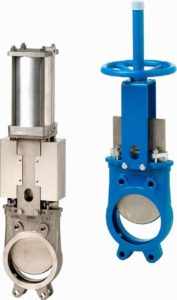
NTGD Wafer Knife Gate Valve — Compact, Reliable Solution for Industrial Flow Control

Wafer Type Knife Gate Valve

Ntgd wafer type knife gate valve adopts narrow body design and structure, with solid and reliable seat and packing sealing performance to ensure the reliability in operation. The gate is close to the valve body to form a sharp cutting effect when opening and closing, which can prevent the blockage of impurities in the medium. 

NTGD Wafer Type Knife Gate Valve

wafer type knife gate valve

The NTGD Wafer Knife Gate Valve provides a compact and reliable solution for industrial flow control. Its design enables precise flow regulation, even when handling abrasive or viscous media such as slurry, pulp, or dry solids. Operators benefit from a clog-resistant structure and tight sealing performance, which ensures zero-leak shutoff. The valve’s self-cleaning action removes residue during operation, reducing downtime and simplifying maintenance. This combination of features makes it a preferred choice in demanding environments where space, durability, and efficiency matter.

Key Advantages

  • The NTGD Wafer Knife Gate Valve is compact and designed for efficient flow control in tight spaces, making it ideal for industries like mining and wastewater treatment.
  • This valve features a sharp, beveled gate that cuts through thick or solid materials, ensuring reliable shut-off and preventing leaks.
  • Operators benefit from easy installation and maintenance due to the valve’s lightweight design and fewer moving parts, which reduces downtime.
  • The valve is suitable for handling abrasive and viscous media, such as slurries and heavy oils, providing durability and long service life.
  • Choosing the right actuation method—manual, pneumatic, electric, or hydraulic—allows operators to customize the valve’s performance to meet specific process needs.

Wafer Knife Gate Valve Overview

What Is a Wafer Knife Gate Valve

A wafer knife gate valve is a specialized flow control device designed for challenging industrial applications. Its sharp, beveled gate slices through thick or solid-laden media, making it ideal for handling slurry, pulp, and dry solids. The valve’s compact wafer-style body fits snugly between pipeline flanges, reducing installation space and weight. Operators in industries such as mining, pulp and paper, wastewater treatment, and bulk material handling rely on this valve for its ability to provide reliable shut-off and minimal maintenance.

Note: The wafer knife gate valve stands out for its ability to manage abrasive, viscous, or particulate-laden fluids where traditional valves may clog or leak.

The following table highlights the key differences between wafer knife gate valves and traditional gate valves:

Feature Wafer Knife Gate Valve Traditional Gate Valve
Design and Functionality Sharp, beveled gate for cutting through thick media Flat or wedge-shaped gate, less effective for solids
Sealing Mechanism Soft sealing surface for tight seals in low pressure Metal-to-metal sealing, may leak with thick media
Applications Used in pulp and paper, wastewater, mining Used in oil and gas, water distribution
Pressure Handling Best for low-pressure systems Handles a wide range of pressures
Maintenance and Durability Easy maintenance, long service life Requires regular maintenance for high pressure

Industries and typical applications include:

Industry Applications
Mining & Mineral Processing Slurry, tailings, and abrasive media
Pulp & Paper Pulp stock lines, recycle systems, and fiber recovery
Wastewater Treatment Sludge, raw sewage, and grit handling
Chemical & Petrochemical Corrosive fluids and chemical slurries
Cement & Bulk Handling Flow control of powders, ash, and dry solids

How It Works

The wafer knife gate valve operates by moving a sharp-edged gate vertically through the flow path. When the operator actuates the valve, the gate descends to cut through any solids or thick media present in the pipeline. This action isolates the flow and ensures a tight seal, even in systems with abrasive or fibrous materials.

Valve designs offer both bi-directional and uni-directional shut-off options. Bi-directional valves handle pressure from either side and provide reliable sealing regardless of flow direction. Uni-directional valves, on the other hand, seal effectively only when pressure comes from one direction. The table below compares these two types:

Feature Bi-Directional Valve Uni-Directional Valve
Pressure Handling Handles pressure from both sides Handles pressure from a single direction
Shut-off Capability Provides tight shut-off regardless of flow direction May fail to seal if flow reverses
Seat Arrangement Seats on both upstream and downstream sides Seat only on the downstream side
Application Suitability Suitable for systems with fluctuating flow Ideal for predictable, constant flow applications
Cost Generally more expensive due to complex design Lower cost due to simpler design
Safety Blocks backflow and leakage under pressure Less effective against backflow
Lifespan Designed for longevity in fluctuating situations Suitable for stable flow conditions

Tip: For systems with variable or reversing flow, bi-directional wafer knife gate valves offer enhanced safety and performance.

Design Goals

Engineers design wafer knife gate valves to meet the rigorous demands of industrial flow control. The primary goals include:

  • Flow Control: The knife-edge gate enhances the ability to manage fluid flow, especially with solids or slurries.
  • Efficiency: The valve optimizes pipeline performance by reducing clogging and ensuring smooth operation.
  • Durability: Robust construction ensures long-lasting service, even in abrasive or corrosive environments.

Additional design objectives focus on reliable isolation and regulation of fluid flows, particularly in systems where media contain suspended solids.

The compact structure of the wafer knife gate valve delivers several installation advantages:

  • The valve’s slim profile allows for easy installation in tight spaces.
  • Its lightweight body simplifies handling and reduces support requirements.
  • In retrofit projects, the small footprint enables seamless integration into existing pipelines.

Note: The compact design of wafer knife gate valves makes them especially valuable in facilities where space is limited or where pipeline layouts are complex.

Structure and Materials

Structure and Materials
Image Source: unsplash

Body and Face-to-Face Design

Engineers design the body of a Wafer Knife Gate Valve to fit compactly between pipeline flanges. Two main body types exist: split body and integral body. The split body design consists of two bolted sections, which simplifies maintenance and internal inspection. The integral body, cast as a single piece, offers high strength and minimizes the risk of external leakage. This design enhances reliability in demanding applications.

The integral body with a full bore ensures smooth flow and reduces leakage risk, while guide claws help eliminate clogging during shutoff.

Industry standards define face-to-face dimensions for consistent installation. The table below summarizes key standards:

Standard Description
ISO 5752 Provisions for lined valves regarding face-to-face dimensions.
GB 12221 Dimensions for the ‘same type series’ of low-pressure gate valves.
EN 558-1 Face-to-face dimensions for elastomeric lined valves and installation requirements.
JIS 2002 Face-to-face dimensions for lined valves, especially with rubber valve seats.

Gate and Seat Construction

The gate features a sharp, beveled edge that slices through thick or solid-laden media. Manufacturers use materials such as cast steel, stainless steel, and special alloys for the gate. These materials provide high strength and resist wear, impact, and corrosion. The seat may use elastomers or metals, depending on the application. Side-entry and preloaded seat designs allow for easy replacement and adjustment, reducing maintenance costs and extending service life.

Material Properties Durability Impact
Cast Steel High strength, wear and impact resistance Performs well in high-pressure, high-wear environments
Stainless Steel Corrosion resistance Ensures long-term operation in corrosive media
Cast Iron Low cost, decent sealing Suitable for general use, less ideal for high-pressure applications
Special Materials High strength, heat resistance (e.g., titanium alloy) Suitable for extreme conditions, improves durability

Actuation Methods

Operators can choose from several actuation methods to suit their process needs:

  • Manual actuators require physical effort and suit smaller valves or infrequent operation.
  • Pneumatic actuators use compressed air for fast, reliable movement.
  • Electric actuators provide precise control and remote operation.
  • Hydraulic actuators deliver powerful force for heavy-duty or large-diameter valves.
Actuation Method Description
Manual Operated by hand, suitable for simple or low-frequency use
Pneumatic Uses compressed air, ideal for quick and repetitive operation
Electric Powered by electricity, enables automation and remote control
Hydraulic Uses fluid pressure, best for large or high-torque applications

Material Options

Material selection depends on the process media and operating environment. Cast steel and stainless steel offer durability and corrosion resistance for harsh conditions. Cast iron provides a cost-effective solution for less demanding applications. Special alloys, such as chrome-molybdenum steel or titanium, withstand extreme temperatures and pressures. Choosing the right material ensures long service life and reliable performance.

Selecting the appropriate materials and actuation method maximizes efficiency and minimizes downtime in industrial flow control systems.

Features & Benefits

Compact Design

Engineers value the compact design of the wafer knife gate valve for its ability to maximize efficiency in limited spaces. The ultra-short structure length minimizes flow resistance and reduces the amount of space required for installation. This design also supports pipeline strength and saves raw materials. Operators benefit from features such as the U-shaped sealing gasket, which delivers excellent sealing performance, and the full-bore design, which allows strong medium throughput and simplifies maintenance in environments with heavy debris. The knife function enables the valve to cut through solids, preventing leakage and ensuring reliable operation.

  • U-shaped sealing gasket for superior sealing
  • Full-bore design for high throughput and easy cleaning
  • Knife edge cuts through debris, reducing blockages
  • Ultra-short structure length for minimal space usage
Evidence Description Source Link
Short structure length can save raw materials, install space and effectively support pipeline strength. YM Valves
The compact design and short structural length, saving installation space and effectively supporting pipeline strength. ATO
The valve is featured with compact design, being space-effective, low price, easy installation. Jonloo Valves

Reliable Shut-Off

The wafer knife gate valve delivers reliable shut-off, even when handling abrasive or viscous media. Its perimeter seat design ensures a bubble-tight seal in both directions, making it suitable for dead-end service and isolation applications. The rounded cast packing chamber and premium packing system enhance sealing performance, extend packing life, and reduce maintenance needs. Operators in industries such as mining, wastewater treatment, and pulp and paper rely on this valve to manage challenging media like slurries, heavy oils, and paper pulp. The blade-like gate cuts through solids, ensuring the valve closes fully and prevents leakage where traditional valves might fail.

Feature Description
Media Handled Paper pulp, coal ash, chemical materials, sewage, foodstuffs
Advantages Light switch, good sealing, good elastic memory, long service life
Applications Water, sewage, construction, petroleum, chemical, food, medicine, light textile, electric power
Performance Handles thicker flows of light grease, heavy oil, varnish, slurry, wastewater, and paper pulp
Limitations Low pressure restrictions; seals may fail with large, dry materials

The perimeter seat design ensures a bubble-tight shutoff in both directions, making the valve effective for a wide range of fluids, including sludges and slurries.

Easy Installation & Maintenance

The simple structure of the wafer knife gate valve streamlines installation and maintenance. Its lightweight construction allows for easy handling and placement, even in confined spaces. The valve contains fewer moving parts, which reduces wear and tear and minimizes the need for frequent maintenance. Operators can quickly install or remove the valve, saving time and labor costs. The design also enables effective management of debris, as the knife edge cuts through solids and prevents blockages.

Feature Knife Gate Valve Ordinary Gate Valve
Structure Simple, gate moves perpendicular to fluid More complex
Size Ultra-short structure length, small size Generally larger
Installation Easy to install and disassemble More complicated installation
Sealing U-shaped gasket provides good sealing Varies, may not be as effective
Debris Handling Cuts through and manages debris in the medium Less effective in handling debris
  • Lightweight design allows for easier installation in tight spaces
  • Fewer moving parts reduce maintenance needs over time
  • Simple structure facilitates quick repairs and long-term operational efficiency

Cost Efficiency & Durability

The wafer knife gate valve offers significant cost efficiency and durability in continuous industrial use. Stainless steel models provide excellent corrosion resistance and long service life, making them ideal for high-pressure and corrosive environments. Cast iron options deliver a cost-effective solution for less demanding applications, while alloy valves withstand extreme conditions and offer enhanced durability. Knife gate valves generally cost less than traditional gate valves in larger sizes and require less maintenance in slurry services, which lowers lifecycle costs. However, selecting the appropriate material and valve type remains essential to avoid increased maintenance expenses and operational downtime.

Valve Type Cost Considerations
Gate Valves More expensive in large sizes due to heavier body and thicker walls.
Knife Gate Valves Generally cheaper for larger diameters and easier to maintain in slurry services.
Wrong Valve Selection Can lead to higher maintenance costs and downtime, outweighing initial savings.

Knife gate valves are more cost-effective in large sizes and easier to maintain in slurry services, leading to lower lifecycle costs in relevant applications.

The combination of robust materials, simple construction, and efficient sealing ensures that the wafer knife gate valve delivers long-term value and reliability for industrial operators.

Applications

Applications
Image Source: pexels

Industrial Uses

Many industries rely on the Wafer Knife Gate Valve for its ability to manage challenging flow control scenarios. Operators in pulp and paper facilities use these valves to handle fibrous slurries and pulp stock lines. Wastewater treatment plants depend on them for managing sludge, raw sewage, and grit. The mining sector values their performance in abrasive slurry and tailings applications. Heavy oil refineries and power generation plants also select these valves for their efficiency and reliability.

Key reasons for selection include:

  • Efficiency in handling viscous and abrasive materials
  • Compact design that fits tight spaces
  • Low cost compared to traditional valves
  • Ease of maintenance, reducing downtime
  • Superior flow control for thick or particulate-laden media

Industries that benefit most from these features include:

  • Pulp and paper
  • Wastewater treatment
  • Heavy oil processing
  • Mining and mineral processing
  • Power generation

Operators choose these valves for their cost-effectiveness, lightweight construction, and ability to actuate easily, even in demanding environments.

Suitable Media

The Wafer Knife Gate Valve excels in controlling a wide range of media. It performs best with thick, viscous, or abrasive substances. Typical applications include slurries, heavy oils, light grease, paper pulp, varnish, and wastewater. The sharp gate design allows the valve to cut through solids and prevent clogging, ensuring reliable shut-off and minimal leakage.

Common media types:

  • Slurries containing sand, minerals, or fibers
  • Heavy oils and viscous fluids
  • Paper pulp and recycled fiber
  • Wastewater with suspended solids
  • Light grease and varnish

However, users should note some limitations. These valves operate best in low-pressure systems and may not suit applications requiring high cleanliness or sanitary conditions.

Media Type Suitability Notes
Slurry Excellent Handles abrasive and solid-laden flows
Heavy Oil Excellent Cuts through thick, sticky fluids
Paper Pulp Excellent Prevents clogging in fibrous applications
Wastewater Excellent Manages grit and suspended solids
Clean Water Limited Not ideal for sanitary or high-purity use

The valve’s robust design ensures dependable performance in harsh industrial environments, making it a preferred choice for operators managing difficult media.

Technical Specs

Size & Pressure Range

NTGD Wafer Knife Gate Valves offer a broad range of sizes and pressure ratings to meet diverse industrial needs. Engineers can select valves for both compact pipelines and large-scale systems. The product line covers low-pressure to demanding applications, ensuring reliable performance in every scenario.

Application Type Typical Pressure Range (psi) Size Range (inches)
Low-pressure applications 15 Custom
General industrial applications 50 – 150 Custom
Demanding applications 150 – 300 Custom

Operators can trust these valves to maintain consistent flow control, even under fluctuating pressures.

Standards & Dimensions

Manufacturers design NTGD wafer knife gate valves to comply with international standards. These standards ensure compatibility with existing piping systems and simplify installation. Common standards include ISO 5752, EN 558-1, and JIS 2002. Each valve features a compact face-to-face dimension, which reduces space requirements and supports easy retrofitting.

  • ISO 5752: Lined valve face-to-face dimensions
  • EN 558-1: Elastomeric lined valve dimensions
  • JIS 2002: Rubber seat valve dimensions

Temperature & Sealing Data

NTGD valves withstand a wide range of temperatures and deliver excellent sealing performance. The design incorporates premium sealing materials such as NBR or PTFE, which resist wear and chemical attack. Operators can rely on these valves for tight shut-off, even in challenging environments.

Specification Value
Maximum Temperature Up to 390°F
Maximum Operating Pressure Up to 150 psi
Seal Qualities NBR or PTFE

The advanced sealing system minimizes leakage and extends service life, making these valves ideal for critical flow control.

Material Configurations

Material selection plays a crucial role in valve performance. NTGD offers a variety of configurations to suit different fluids and operating conditions. The standard design features a durable cast iron body paired with a carbon steel knife. This combination provides strength and longevity. For higher demands, options include stainless steel and special alloys.

Feature Description
Material Cast iron body with carbon steel knife
Pressure Rating PN16 for reliable operation
Size Availability Up to DN400 for large piping systems
Sealing Capability Tight sealing, low leakage
Operation Smooth opening and closing
Application Suitability Water, sewage, abrasive slurries

NTGD’s flexible material options ensure optimal performance and durability across a wide spectrum of industrial applications.

Comparison & Selection

Wafer vs Lug Type

Wafer and lug types both serve as popular choices for knife gate valves. The wafer type features a slim, lightweight body that fits between flanges. This design saves space and reduces installation weight. The lug type, in contrast, uses threaded lugs for direct bolting to flanges. This allows for easy removal of downstream piping without disturbing the valve. Operators often select wafer types for compact systems and lug types for applications requiring isolation or dead-end service.

Feature Wafer Type Lug Type
Installation Between flanges Bolted to flanges
Weight Lighter Heavier
Pipe Removal Both sides must be removed One side can be removed
Cost Lower Higher

Flanged vs Wafer Design

Flanged knife gate valves use full-face flanges for secure connections. This design offers robust sealing and easy alignment. Wafer designs, however, provide a slimmer profile and reduce material costs. Flanged valves suit high-pressure or critical applications. Wafer valves excel in space-limited environments and standard industrial systems.

Wafer vs Butt Weld

Butt weld valves require welding directly to the pipeline. This creates a permanent, leak-proof joint. Wafer valves, on the other hand, install quickly between flanges and allow for easy removal. Operators choose butt weld designs for high-integrity, permanent installations. Wafer types offer flexibility and faster maintenance.

Wafer vs Clamped

Clamped valves use external clamps for attachment. This method simplifies installation but may not provide the same sealing reliability as wafer or flanged types. Wafer valves deliver a balance of secure sealing and easy installation, making them a preferred choice for many industrial users.

When to Choose Wafer Type

Operators select wafer knife gate valves when space is limited, weight reduction is critical, or quick installation is required. These valves perform best in low to medium pressure systems with abrasive or viscous media. Wafer types also offer cost savings for large-diameter pipelines.

Wafer knife gate valves deliver optimal value in retrofit projects, compact layouts, and systems handling slurries or solids.

Installation Tips

Proper installation ensures reliable performance and long service life. Follow these best practices:

  1. Inspect the valve for damage, clean the pipeline, and gather necessary tools before installation.
  2. Confirm the correct installation direction and position. Use the recommended connection method, apply sealing treatment, and lubricate the valve stem.
  3. After installation, inspect the seal, test opening and closing, and tighten all bolts.
  4. During operation, regularly check seals, lubricate the stem, and avoid frequent cycling.

Consistent maintenance and careful installation help maximize the efficiency and durability of wafer knife gate valves.

NTGD Manufacturing

Precision & Testing

NTGD applies advanced manufacturing techniques to every Wafer Knife Gate Valve. Skilled technicians use precision machining to achieve tight tolerances. Each valve undergoes a thorough inspection at every production stage. Automated equipment measures critical dimensions and verifies surface finishes. NTGD conducts pressure and leakage tests on every unit before shipment. These tests confirm that each valve meets strict performance standards. Operators can trust NTGD valves to deliver consistent shut-off and smooth operation in demanding environments.

NTGD’s commitment to quality ensures that every valve performs reliably, even under harsh industrial conditions.

Standards Compliance

NTGD designs and manufactures valves to comply with major international standards. The company follows ISO, EN, and JIS specifications for dimensions, materials, and performance. Engineers review each design to ensure compatibility with global piping systems. NTGD maintains detailed records for traceability and quality assurance. Regular audits and certifications demonstrate the company’s dedication to safety and reliability. Customers receive products that integrate seamlessly into their existing infrastructure.

  • ISO 5752: Face-to-face dimensions
  • EN 558-1: Valve construction and installation
  • JIS 2002: Material and sealing requirements

Custom Solutions

NTGD recognizes that every industrial process has unique requirements. The company offers custom solutions to address specific challenges. Engineers collaborate with clients to select materials, actuation methods, and sealing systems. NTGD can modify valve dimensions or add special coatings for corrosive or abrasive media. The team provides technical support throughout the project, from initial consultation to final installation. This flexible approach helps customers achieve optimal performance and long-term value.

For specialized applications, NTGD delivers tailored solutions that meet the highest standards of quality and efficiency.


The NTGD Wafer Knife Gate Valve stands out for its compactness, reliability, and versatility. Industrial operators trust this valve to handle abrasive slurries, pulp, and dry solids with consistent performance. NTGD delivers solutions that meet demanding flow control needs. For technical support or custom options, readers can contact the NTGD team.

Choose NTGD for dependable flow control in challenging environments.

FAQ

What media can the NTGD Wafer Knife Gate Valve handle?

The NTGD Wafer Knife Gate Valve manages abrasive slurries, pulp, dry solids, and viscous fluids. Operators use it in mining, wastewater, pulp and paper, and bulk handling industries.

How does the compact design benefit installation?

The compact body fits between flanges, saving space and reducing weight. Technicians install the valve quickly, even in tight or retrofit locations.

What actuation options are available?

Operators select manual, pneumatic, electric, or hydraulic actuators. Each method suits different process requirements and levels of automation.

Is maintenance complicated?

Maintenance remains simple. The valve contains few moving parts and features a replaceable seat and gate. Technicians perform inspections and repairs with minimal downtime.

Does the valve provide bi-directional sealing?

Yes. The NTGD Wafer Knife Gate Valve offers bi-directional sealing. This feature ensures reliable shut-off and prevents leakage, regardless of flow direction.